


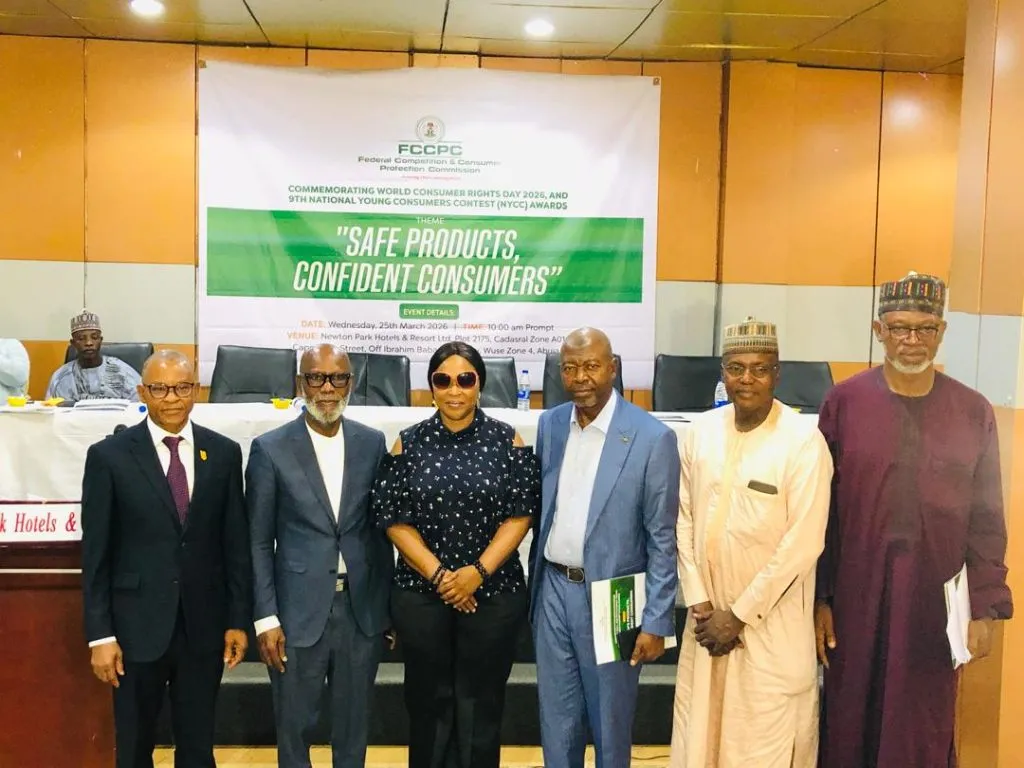
The Federal Competition and Consumer Protection Commission (FCCPC) has issued a firm directive to manufacturers, importers, distributors, and retailers: all consumer products in Nigeria must now carry labels in English.
The move is part of a broader effort to protect public health, empower consumers to make informed choices, and restore confidence in a market increasingly threatened by unsafe and substandard goods.
The directive comes amid growing concerns over the influx of poorly labelled and low-quality products across Nigerian markets, a trend the Commission says is undermining trust and distorting fair competition.
A Non-Negotiable Standard
Speaking at the 2026 World Consumer Rights Day event in Abuja, FCCPC Executive Vice Chairman and CEO, Tunji Bello, represented by Director of Surveillance and Investigation, Bola Adeyinka, made it clear: product safety and clear labelling are not optional.
According to the Commission, any product labelled solely in a foreign language, without an English translation, is in direct violation of Nigerian regulations.
“Consumers face avoidable risks, market trust diminishes, and law-abiding businesses are placed at a disadvantage,” Adeyinka stated.
For the FCCPC, this is more than compliance, it is a matter of consumer safety and market integrity.
Rising Concerns Over Substandard Goods
Beyond labelling, the Commission raised red flags about the increasing circulation of substandard and misrepresented products across multiple sectors.
Recent surveillance operations have reportedly uncovered:
- Poorly labelled goods
- Products failing basic quality standards
- Cases of deliberate misrepresentation
In response, the FCCPC has intensified enforcement efforts, including:
- Expanded market inspections
- Strengthened product testing
- Closer collaboration with agencies such as the Standards Organisation of Nigeria (SON) and the National Agency for Food and Drug Administration and Control (NAFDAC)
Why English Labelling Matters
The Commission emphasised that English labelling is critical in a country as diverse as Nigeria, where clear communication can directly impact consumer safety.
From usage instructions to ingredient disclosures, accessible information helps prevent health risks, especially when dealing with food, pharmaceuticals, and household products.
Simply put: if consumers cannot understand it, they cannot trust it.
A Call to Businesses and Consumers
The FCCPC is urging businesses to embed safety and transparency across their entire value chain from production and packaging to distribution and retail.
While the Commission clarified that it does not regulate prices, it stressed that fair pricing and responsible business conduct remain essential to a healthy marketplace.
Consumers, on their part, are encouraged to:
- Check product labels carefully
- Verify authenticity and quality
- Report suspicious or non-compliant products
Zero Tolerance Going Forward
The message from the FCCPC is unmistakable: non-compliance will attract consequences.
Sanctions may include fines, product seizures, and outright bans for offending companies.
The Commission reaffirmed its commitment to building a safer marketplace, noting that:
“Safe and reliable markets depend on responsible business conduct, effective regulation, and informed consumer participation.”
Rebuilding Trust in the Market
As Nigeria continues to grapple with economic pressures and the rise of counterfeit goods, this directive signals a tougher regulatory stance aimed at restoring consumer confidence.
Industry observers believe stricter enforcement will not only curb the spread of unsafe products but also create a more level playing field for compliant businesses, ultimately driving sustainable growth in the market.


